Spring race season is here, bringing fresh motivation to lace up and hit the pavement. Whether you’re aiming for a 10K or tackling full marathon training, the journey from preparation to performance and recovery is what truly defines success. With races across Canada drawing runners of all levels, the right plan, gear, and support matter. From running tips to recovery tools, London Drugs makes it easy to find everything you need for race season.
Spring Races to Put on Your Calendar
Spring race season brings a mix of city courses and destination runs so runners of all levels can find an event that fits their goals.
- Vancouver Sun Run — April 19, 2026 — Vancouver, BC
- TC10K — April 26, 2026 — Victoria, BC
- BMO Vancouver Marathon — May 3, 2026 — Vancouver, BC
- Jasper Canadian Rockies Half Marathon — April 25, 2026 — Jasper, AB
- Calgary Marathon — May 24, 2026 — Calgary, AB
- Winnipeg Police Service Half Marathon — May 3, 2026 — Winnipeg, MB
- Saskatchewan Marathon — May 31, 2026 — Saskatoon, SK
Build Your Running Routine
A strong routine is the foundation of becoming truly race-ready.
Start Your Training Plan
If you’re wondering how to start running, begin with a simple run/walk method and build consistency. Beginners should aim for three runs per week, gradually increasing time and distance. Progression is key—Rome wasn’t built in a day! Start with learning how to run a 10K, then move into half-marathon training, and when you feel ready, start training for a marathon.
You can follow online guides, such as the viral couch-to-half-marathon training plan that’ll take you from a novice to an experienced runner in as little as six months. Balance your week with long runs, easy runs, and rest days to avoid burnout.
Use Tech to Stay on Track
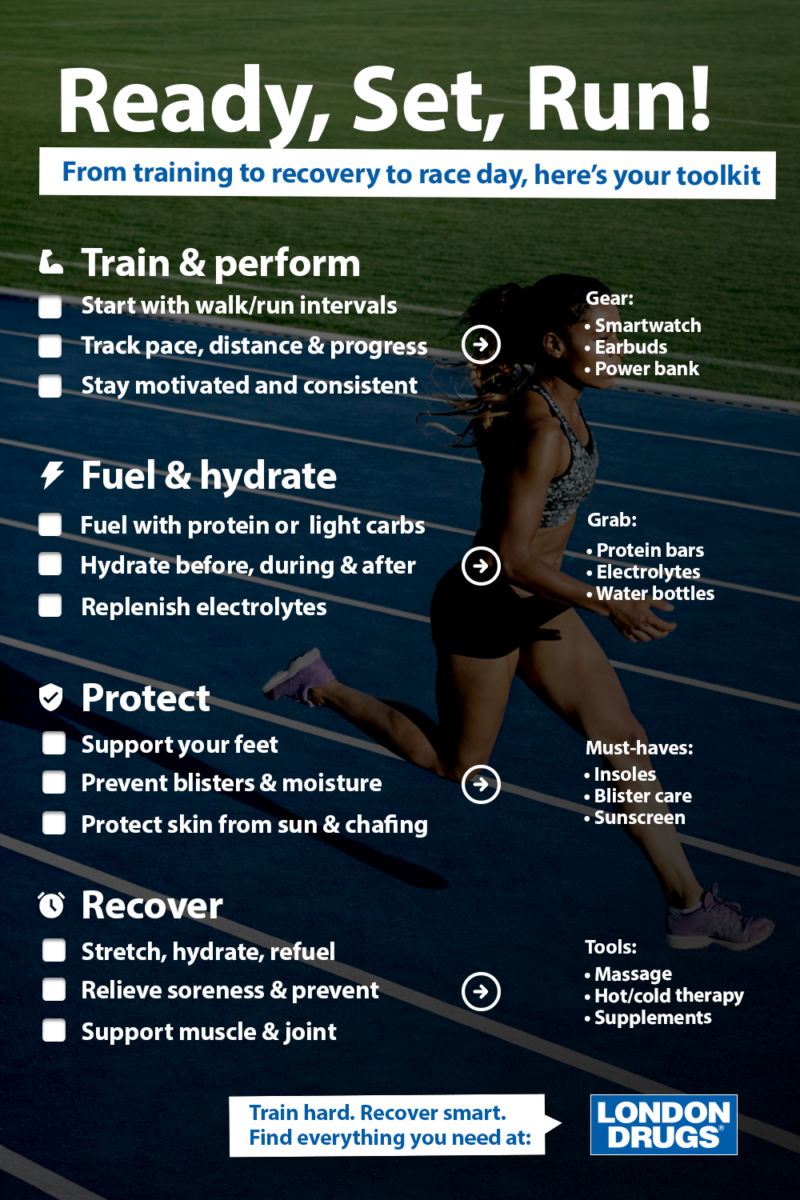
Tracking progress keeps motivation high and prevents overtraining. A fitness running tracker or smartwatch, such as the Garmin Forerunner or your Apple Watch, can monitor pace, distance, and heart rate while helping you stay consistent with your run training goals. Pair it with wireless earbuds by JBL or JLab for entertainment or guided coaching, and consider a power bank to keep your tech charged for long runs.
Fuel, Hydrate & Perform
Proper fueling and running hydration strategies can make or break a run.
Fuel Before You Run
Stick to light, easy-to-digest carbs 30 to 90 minutes before heading out to support steady energy. Think simple options like a banana, applesauce, toast, or a small handful of pretzels—foods that are easy on your stomach and quick to fuel your run.
Hydrate While You Run
Hydration is critical during longer races like the Vancouver Sun Run or similar events. Electrolytes help maintain balance and endurance, making Nuun hydration tablets or sports drinks like Gatorade or Powerade essential additions to your routine. Add a reliable water bottle from brands like Hydro Flask or Contigo, and you’re ready to hit the pavement.
Protect Your Body While You Train
Staying injury-free ensures long-term progress in running training tips.
Support Your Stride
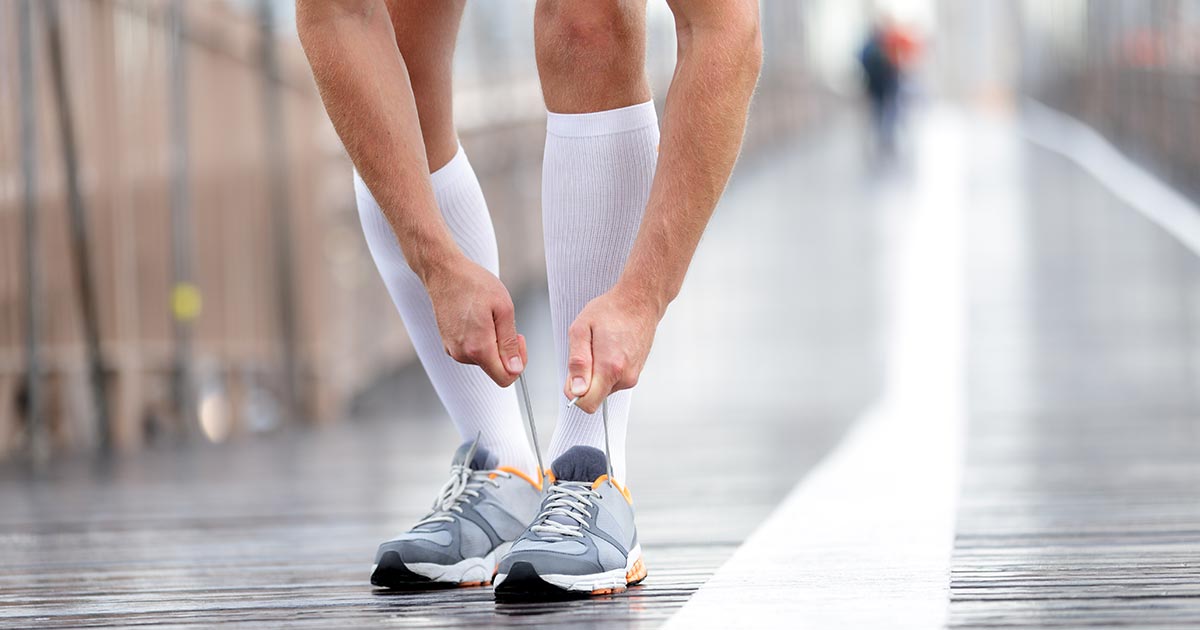
Comfort and alignment are key to avoiding repetitive stress injuries. Insoles and compression socks can improve circulation and reduce fatigue, helping maintain consistency in your running routine.
Prevent Blisters & Manage Moisture
Long runs increase friction and moisture, which can lead to discomfort or issues like athlete’s foot or runner’s foot. Blister care kits and anti-fungal treatments help keep feet healthy and ready for the next run.
Protect Your Skin
Outdoor running means exposure to the sun and chafing. Use sunscreen to guard against UV rays and apply anti-chafe solutions like Vaseline or body deodorant to high-friction areas like the inner thighs, underarms, and along the sports bra line.
Recover After Every Run
Recovery is just as important as the run itself.
Recover Right Away
Hydrate, stretch lightly, and cool down after every session. Ice packs or hot-cold therapy can reduce inflammation and support muscle recovery. Consistent post-run habits can help reduce soreness and keep your training on track.
Use Tools to Relieve Muscle Tension
Massage guns and muscle rubs are essential recovery tools that target soreness and tightness, helping you bounce back faster between workouts. Using them regularly can help reduce stiffness and improve overall recovery between training sessions.
Support Long-Term Recovery & Injury Prevention
Ongoing care keeps you moving toward your goals. Magnesium supports muscle function, while KT tape and basic first aid help manage minor injuries. Recovery nutrition supports muscle repair, with protein powders, creatine for performance, and collagen to support long-term strength and joint health.
Start Your Race Season Strong at London Drugs
Race day is your time to shine, so keep it simple. Don’t try anything new, stick to your pacing and running hydration plans, and trust your training. Every runner’s journey is different, and your routine should reflect what works best for you. With everything from tech to fuel to recovery tools in one place, London Drugs makes it easy to get race-ready.
When you find your rhythm, share it. Follow London Drugs on Instagram and show us how you train—what’s your running routine?